Developer guides
Free SMS API: Send Texts Through Your Own Android Phone
Is there a free SMS API? The honest options, and how to send SMS from your own Android phone and SIM with a REST API, free for 28 days.
A free SMS API that sends unlimited texts to any number, forever, doesn't exist. Every SMS crosses a mobile network, and someone pays the carrier for it.
What you can get is an API where the per-message cost is close to zero: point it at an Android phone, and the texts go out on the SIM plan you already pay for. This guide covers the real options, then sends an SMS through your own phone with the Hypersender API. You can follow along on the 28-day free trial.
The real free SMS API options
| Option | What's free | The catch |
|---|---|---|
| Trial credit at a big SMS provider | A small credit when you sign up | It runs out fast, then you pay per message plus carrier fees. Trials often only send to numbers you verify |
| "Free SMS" websites with an API | A few texts a day | Shared sender numbers, ads or limits, and nothing you'd put in front of customers |
| Open-source Android gateway apps | The software | You host and maintain the server side, and fix it when it breaks |
| Your own phone with Hypersender | 28-day trial, then no fee per message | $7.99 a month per phone after the trial; your SIM plan pays for each text |
The last two use the same idea: an Android phone with a SIM card becomes the SMS gateway. Messages go out from your own number, so replies come back to you, and if your plan includes unlimited texts, each message costs you nothing extra.
How a phone becomes an SMS API
- You install the Hypersender SMS app from Google Play on an Android phone (Android 9 or newer) and link it to an SMS instance in the dashboard.
- Your code calls the send-message endpoint with a number and the text.
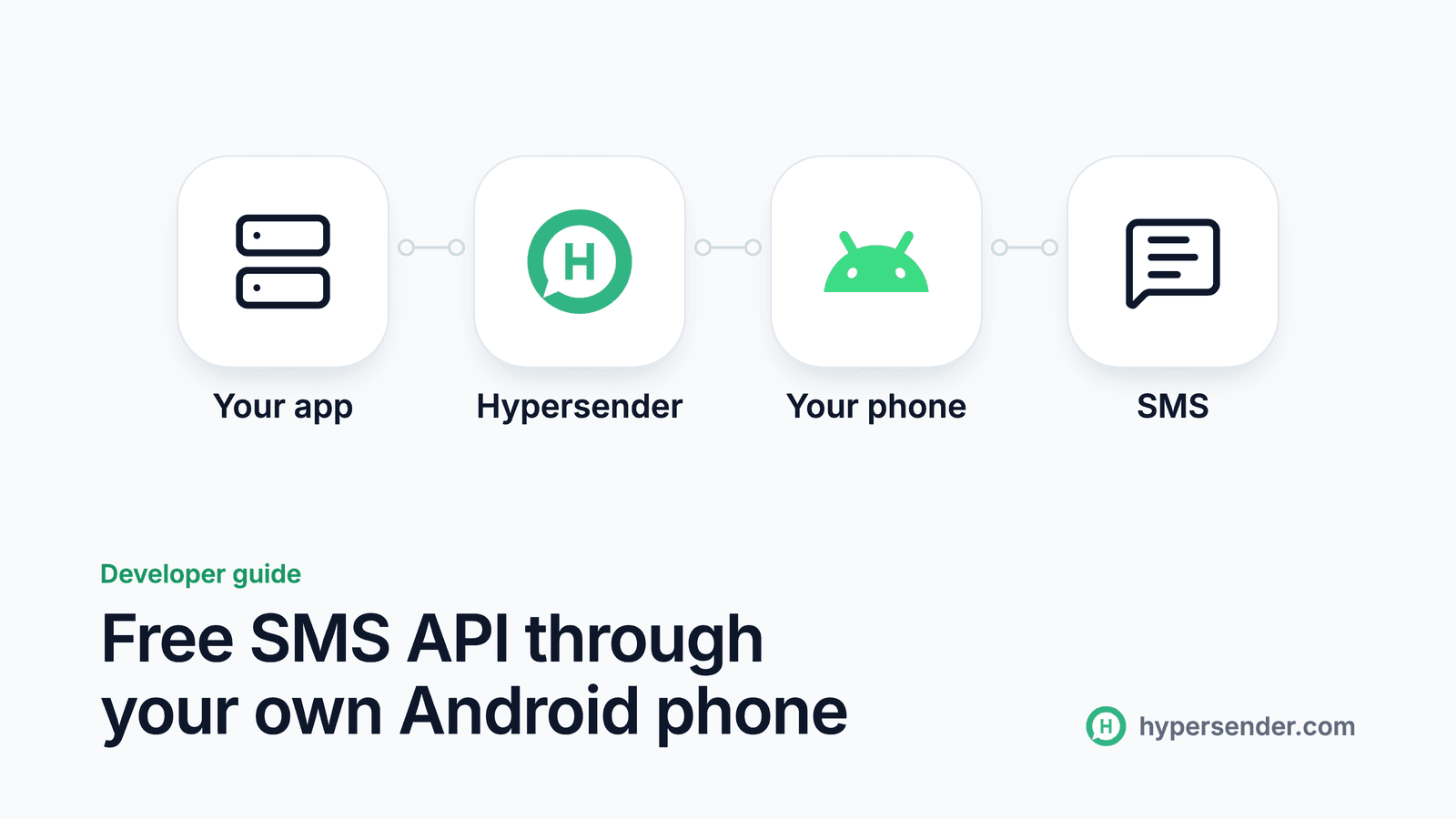
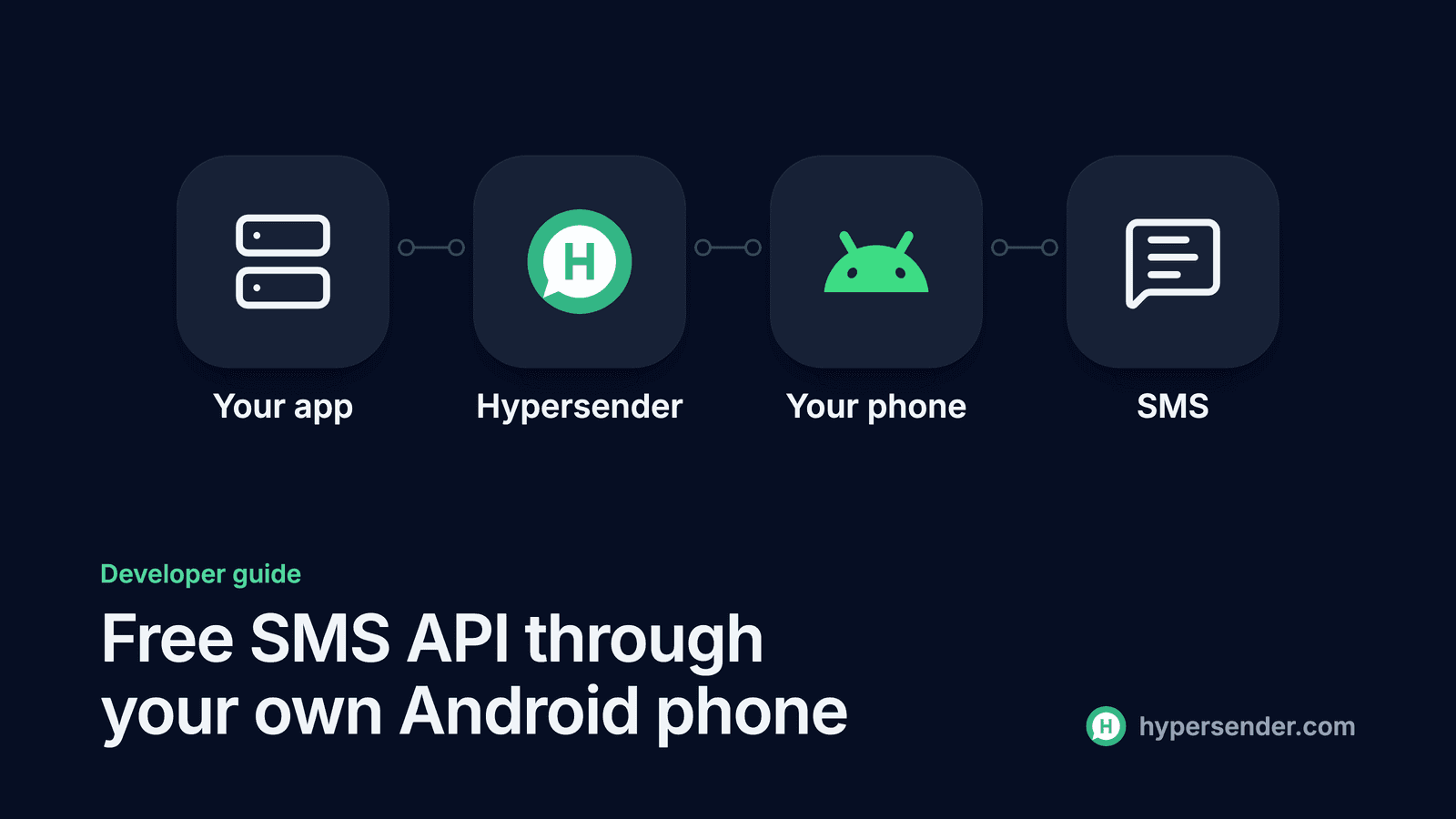
- Hypersender pushes the job to the phone, the phone sends it from its SIM, and the result comes back to your webhook.
- Incoming texts to that SIM reach the same webhook, so you can read replies and codes.
You get a hosted REST API, retries, scheduling and delivery webhooks, without running a server for the phone to talk to.
Send your first SMS
Create a free Hypersender account, add an SMS instance, link the phone, and copy the instance ID and API key. Then send a text:
curl -X POST "https://app.hypersender.com/api/sms/v1/{instance}/send-message" \
  -H "Authorization: Bearer <api-key>" \
  -H "Content-Type: application/json" \
  -H "Accept: application/json" \
  -d '{"to": "+12025550147", "content": "Your appointment is tomorrow at 10:00. Reply C to confirm."}'
The API answers right away with 201 and the queued message, before the phone sends it. A few details worth knowing:
- Write numbers in international format, like
+12025550147. Spaces and dashes are stripped for you. contenttakes up to 1,600 characters and long text goes out as a multipart SMS. The SMS character counter shows how many parts a message needs, and why Arabic or emoji cut a part to 70 characters.- Pass
schedule_send_atto send later, up to 3 days ahead in the phone's time zone. - Pass a
request_idso a retried job never sends the same text twice.
From JavaScript it's the same request:
await fetch(`https://app.hypersender.com/api/sms/v1/${INSTANCE_ID}/send-message`, {
  method: "POST",
  headers: {
    Authorization: `Bearer ${API_KEY}`,
    "Content-Type": "application/json",
    Accept: "application/json",
  },
  body: JSON.stringify({ to: "+12025550147", content: "Your code is 482913", request_id: "otp-7731" }),
});
SDKs for Laravel, Node.js, Python and Go wrap the same calls.
What it costs after the trial
The trial lasts 28 days, with up to 100 messages a day. After that, each phone is $7.99 a month on the SMS plan, with no fee per message from Hypersender. Your carrier bills each text the way your plan says, which for many plans means it's already included.
Compare that with per-message pricing. At 5,000 texts a month, a provider charging around a cent per text bills about $50 in message fees alone, before carrier fees. Here it's $7.99 for the phone plus whatever your SIM plan charges. The cost calculator compares Twilio's SMS rates for your country.
When a phone-based SMS API fits, and when it doesn't
It fits messages people expect from you: appointment reminders, order updates, login codes, alerts to your own team. It also fits replies, because texts come back to a real number.
It doesn't fit mass marketing. A phone sends at the pace of a phone, and carriers watch for a SIM blasting thousands of identical texts. Big campaigns to cold lists need a registered sender with an SMS provider, and you'll pay per message for it.
Next steps
- Android SMS gateway: the full setup, with receiving and webhooks.
- SMS OTP API: send and check login codes from your own number.
- Forward text messages to email or Slack: use the same phone to route incoming texts.